ResearchResearch guide
How do vets tell if a dog with arthritis is moving better?
The exam, a video of your dog getting up and a questionnaire can each show a different part of the change.
On this page
A dog who trots into the clinic may still struggle to rise after a nap at home. If getting out of bed is the hard part, a short video of that moment gives your vet something they might never see in the exam room.
How can you tell whether arthritis care is helping?
Choose a familiar activity your dog already does within their plan. Getting up, reaching the outside door or finishing the usual short walk may be enough. Notice the help needed and comfort afterward. Don't turn the check into an extra exercise session.
| Activity | What to record | Keep the comparison fair |
|---|---|---|
| Rising after rest | Attempts, slipping and whether help was needed. | Note the bed or floor, rather than changing surfaces as a test. |
| An allowed walk | Help, hesitation and comfort later. | Keep to the prescribed route and duration. |
| A regular doorway | Where the dog pauses and the support provided. | Record a new mat or aid so the clinic knows the task changed. |
Keep the clips in one place on your phone. Add the date and a few words you’ll recognize later, like “after breakfast, needed a hand getting up.” AAHA explains chronic-pain assessment.
What the examination adds
The vet can examine soreness, joint movement, gait and how the dog distributes weight. Those findings help explain why the home task is difficult. Cornell's osteoarthritis overview describes that assessment. Home notes complement it; they cannot locate every source of pain.
What are LOAD and CBPI scores?
LOAD is the Liverpool Osteoarthritis in Dogs questionnaire, which asks about everyday mobility. CBPI is the Canine Brief Pain Inventory, covering pain and its interference with function. Repeating the same clinic-recommended form gives you a consistent way to report change. The LOAD validation study and the CBPI study explain what the measures assess.
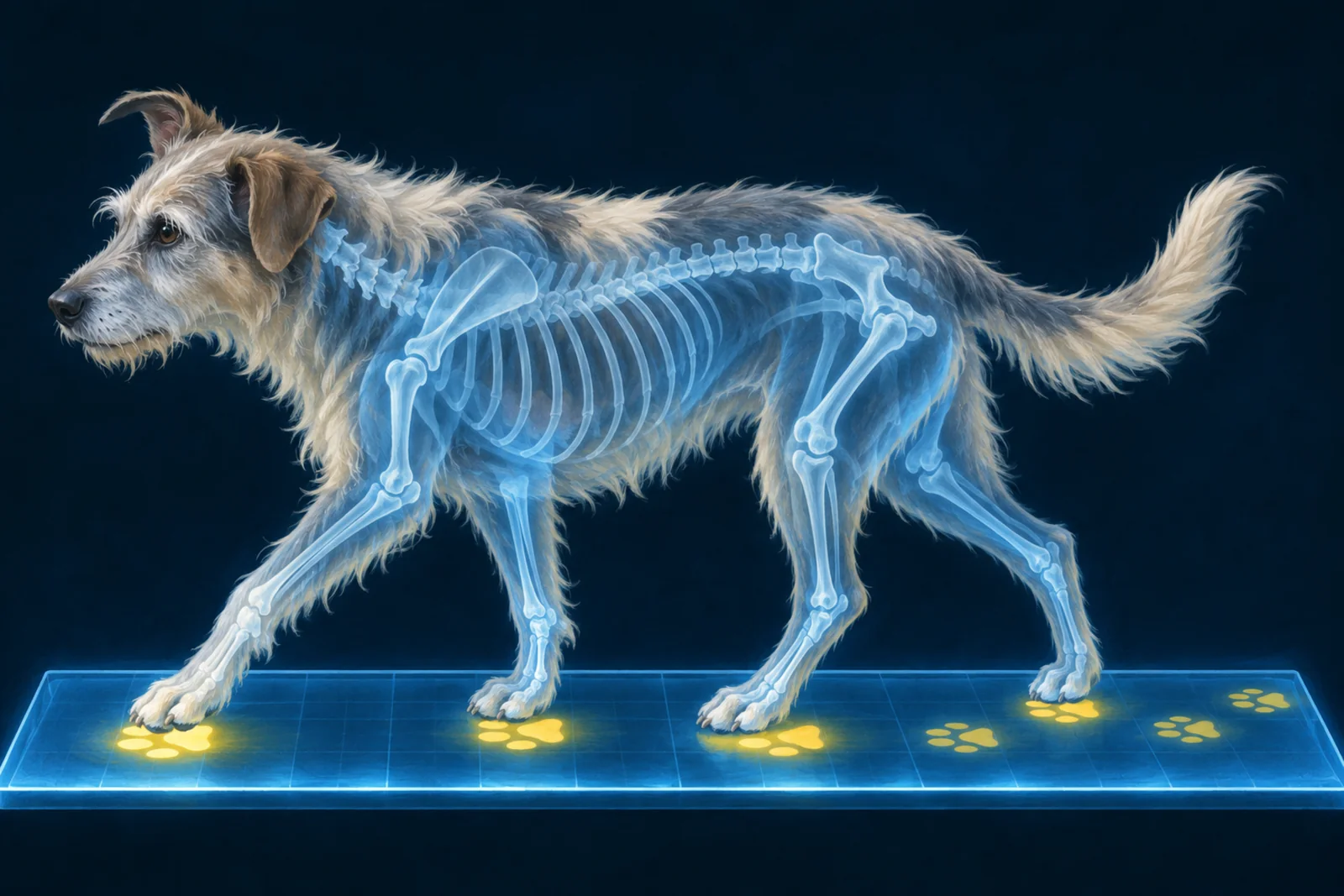
Owner scores and force-platform readings lined up only loosely in the LOAD research. The platform captured a few steps in the clinic. The owners had watched their dogs get up, walk and play all week.
Count the recovery after a walk too
In Watson's Rottweiler case, a mile was manageable earlier; years later, that distance left him struggling to rise for days.
Distance alone would miss that cost. Bring the comfortable moments and the difficult aftermath to the recheck. If your dog suddenly loses ability or pain worsens, call sooner rather than waiting to complete a week's notes.
Sources
Cornell's osteoarthritis overviewvet.cornell.edu
The LOAD validation studyjournals.plos.org
the CBPI studypmc.ncbi.nlm.nih.gov
Watson's Rottweiler caseahvma.org