Case FilesOwner care guideIVDD · spinal disc disease
How do you manage IVDD crate rest when you have to go to work?
Arrange the visits your dog actually needs, leave clear instructions and have someone who can get there if plans change.
On this page
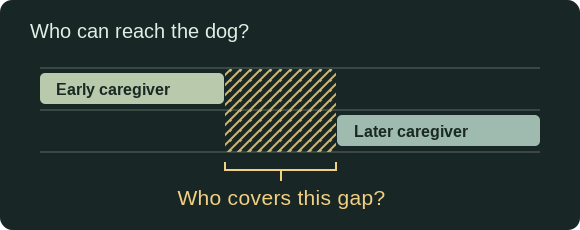
Who has a key and can take your dog out while you’re at work? Start with the toilet trips, medication and hands-on help your clinic has asked for. Next to each one, write the name of the person who can be there.
There is no universal safe eight-hour shift for an IVDD dog. Toileting, prescribed medication, help moving and the ability to settle can make two dogs' days very different. Take your proposed schedule to the treating team before the first shift back.
One family looked at offsetting their work hours
An owner of a miniature dachshund with suspected IVDD had managed a week working from home, but couldn't do it for the whole rest period. They were considering different start and finish times from their partner to shorten the dog's time alone. A commenter described help from a relative followed by lunchtime visits. Read the workday discussion.
Those arrangements are useful possibilities, not visit intervals for every dog. In another workday thread, an owner was trying to arrange help while waiting for a specialist assessment for suspected IVDD. Their later update reported another diagnosis. That is a caregiving question, not an IVDD recovery result.
Find the gaps before the first morning back
Write your departure, return and commute times beside the actual care instructions. Add each task and a person's name. "Someone will pop in" isn't settled until that person knows when, has a key and can provide the required care.
| When | What needs a named person |
|---|---|
| Before departure | Tasks due then, a check of the rest area and a note of any change overnight. |
| During the shift | Each required visit, the tasks due and a way to confirm they were completed. |
| If a visitor cannot come | A backup who has agreed, has access and knows the instructions. |
| At home again | Read the record before repeating a task or giving medication. |
If nobody can get there when your dog needs help, flag that gap with the clinic before your shift.
Can the helper do more than open the crate?
ACVS describes confinement and nursing needs during recovery. Some dogs require bladder care. The clinic must teach whoever will provide it and set the schedule. Do not leave an untrained visitor to improvise.
Have your helper visit while you are home. Show the permitted toilet routine and clinic-approved handling. Make sure they can manage your dog's size and support needs. Leave the equipment, current instructions and phone numbers together.
If medication is due, agree who gives it and records it. A completed-task note prevents the next person having to guess. Nobody should change the dose or add activity to make a workday easier to cover.
A camera needs a person behind the plan
A camera can show you whether your dog has settled. It cannot straighten bedding, help with toileting or drive to the clinic. Test the connection from outside the house, check the view and decide who can get there if you see a problem.
If your dog cannot settle in the prescribed space, call the clinic before a long absence. Persistent distress deserves help. Don't assume you must ignore it until your shift ends.
What if nobody can cover the care?
Explain the gap to the clinic and ask about supervised nursing or a qualified caregiver locally. Give the actual care requirements. Ordinary daycare can involve movement and play that conflict with rest instructions, so it cannot simply replace recovery care.
New weakness, inability to stand, worsening pain or trouble passing urine needs prompt veterinary contact. Do not wait until after work to ask what to do.
Once the visits are covered, our crate-rest boredom guide looks at the long quiet hours. For the first workday, the most reassuring preparation is a real person assigned to each care task and a backup who knows they are the backup.
Sources
Read the workday discussionreddit.com
another workday threadreddit.com
ACVS describes confinement and nursing needs during recoveryacvs.org